Preventive Maintenance (PM): Everything You Need to Know

Preventive Maintenance (PM) is your key to unlocking a world of hassle-free equipment and machinery. It’s the secret sauce to keep your operations running smoothly and avoid the headaches that come with unexpected breakdowns. In this ultimate guide, we’ll explore everything you need to know about PM, from its benefits to the various methods used. So sit back, relax, and let’s dive into the world of Preventive Maintenance!

I. The ABCs of Preventive Maintenance (PM)

a. What is Preventive Maintenance (PM)?

Preventive Maintenance (PM) is the practice of routinely inspecting and servicing equipment to keep it in optimal working condition. It involves scheduled maintenance tasks, such as cleaning, lubricating, adjusting, and replacing worn parts before they cause a major issue.

The goal is to nip potential problems in the bud and extend the life of your machinery.

b. Why is PM essential?

There’s no denying that PM is vital for your equipment’s health. Here are a few reasons why:

– Prolongs equipment life: Regular maintenance can help you get the most bang for your buck, ensuring your machinery lasts longer and performs better.

– Reduces downtime: By catching issues early, you minimize the risk of unexpected breakdowns and costly downtime.

– Improves efficiency: Well-maintained equipment runs more efficiently, helping you save on energy costs and reduce your carbon footprint.

– Enhances safety: Regular inspections and maintenance can prevent accidents caused by faulty equipment, keeping your team safe and sound.

II. The Nitty-Gritty of Preventive Maintenance (PM) Methods

a. Time-Based Maintenance (TBM)

This method involves performing maintenance tasks at regular intervals, such as weekly, monthly, or yearly. The schedule depends on the type of equipment and its usage.

b. Usage-Based Maintenance (UBM)

Here, maintenance is triggered by a specific usage milestone, such as hours of operation, miles traveled, or units produced.

c. Predictive Maintenance (PdM)

This method relies on monitoring equipment performance data to predict when maintenance is required. It involves the use of sensors, data analysis, and advanced algorithms.

III. Implementing a Preventive Maintenance (PM) Program: Step by Step

a. Take inventory of your equipment

Begin by cataloging your equipment and machinery, including details such as make, model, and age.

b. Determine maintenance needs

Figure out the maintenance requirements for each piece of equipment, including the necessary tasks, frequency, and personnel.

c. Develop a PM schedule

Create a comprehensive schedule that outlines when each maintenance task should be performed.

d. Train your team

Ensure that your team is well-trained on maintenance procedures and the importance of PM.

e. Monitor and adjust

Regularly review your PM program and make adjustments as needed to optimize its effectiveness.

IV. FAQs on Preventive Maintenance (PM): Everything You Need to Know

a. What’s the difference between Preventive Maintenance (PM) and Reactive Maintenance?

Preventive Maintenance involves routine servicing to prevent issues from occurring, while Reactive Maintenance is fixing problems as they arise.

b. How much should I budget for Preventive Maintenance (PM)?

The budget will vary depending on the type and age of your equipment. A general rule of thumb is to allocate 2-5% of your equipment’s replacement cost for PM.

c. Can I perform Preventive Maintenance (PM)

myself, or should I hire professionals?

You can perform some basic PM tasks yourself, such as cleaning and lubricating. However, for more complex tasks or equipment, it’s best to hire professionals who have the necessary expertise and tools.

d. How do I know if my Preventive Maintenance (PM) program is working?

To determine if your PM program is effective, track key performance indicators (KPIs) such as equipment downtime, maintenance costs, and overall equipment effectiveness (OEE). If these metrics improve over time, your PM program is likely on the right track.

V. Conclusion: The Power of Preventive Maintenance (PM)

Preventive Maintenance (PM): Everything You Need to Know boils down to the simple truth that taking care of your equipment before problems arise is the key to success.

By implementing a solid PM program, you’ll enjoy the benefits of extended equipment life, reduced downtime, improved efficiency, and enhanced safety.


So don’t wait until it’s too late – give your machinery the TLC it deserves and start reaping the rewards of Preventive Maintenance today!

Access Control Credentials: Everything You Need to Know

Introduction:

Access control credentials are an essential part of modern security systems.

They provide an effective way to restrict access to sensitive areas, information, or assets.

Access control credentials are a type of authentication mechanism that is used to verify an individual’s identity and grant access to restricted areas. In this article, we’ll take a closer look at what access control credentials are, how they work, and why they’re important.

What Are Access Control Credentials?

Access control credentials are unique identifiers that are used to grant or deny access to a specific area or resource.

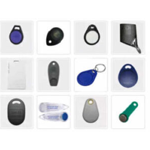
These credentials can be in the form of a physical card, a key fob, vritual card or a digital token.

Access control credentials typically contain information about the user, such as their name, ID number, or other identifying details.

The credentials are verified by an access control system, which checks them against a database of authorized users. If the credentials are valid, the user is granted access; if they’re not, the user is denied access.

Types of Access Control Credentials:

There are several types of access control credentials that are commonly used in security systems. These include:

  1. Proximity Cards: Proximity cards are physical cards that are encoded with a radio frequency identification (RFID) chip. These cards can be scanned by an access control reader, which verifies the user’s identity and grants or denies access accordingly. Proximity cards are commonly used in corporate environments, hospitals, and other facilities that require high-security measures.

  2. Biometric Credentials: Biometric credentials are unique identifiers that use a person’s physical characteristics to verify their identity. These can include fingerprints, retinal scans, and facial recognition. Biometric credentials are highly secure and are commonly used in government facilities and high-security environments.

  3. Smart Cards: Smart cards are similar to proximity cards, but they also contain a microprocessor that can store additional information about the user. Smart cards can be used for a variety of purposes, including access control, payment processing, and loyalty programs.

  4. Key Fobs: Key fobs are small devices that can be attached to a keychain. These devices can be used to grant or deny access to a specific area or resource. Key fobs are commonly used in residential buildings, parking garages, and other facilities that require limited access.

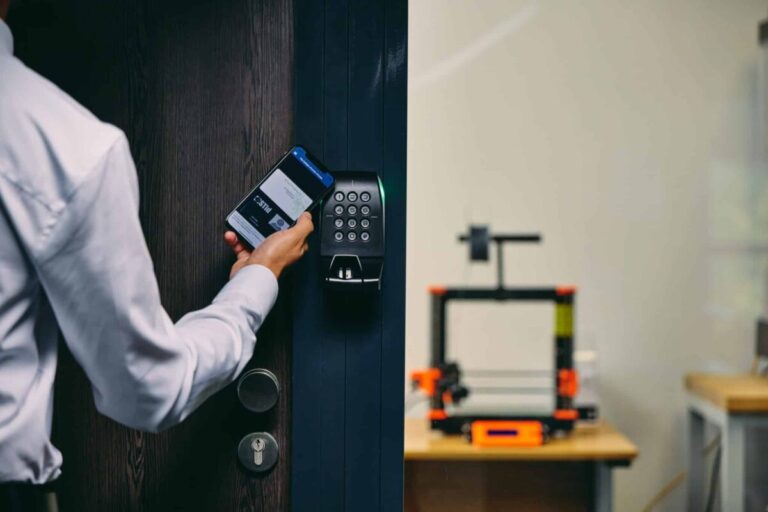
  5. BLE Bluetooth Mobile Access: Virtual card a working on mobile devices and allow its holder to open doors in premises, they are the lastest and safest technology existing for resdiential buildings, office buildings and other type of premises.

Why Are Access Control Credentials Important?

Access control credentials are a critical component of any security system. They provide an effective way to restrict access to sensitive areas or information, and they can help prevent unauthorized access to valuable assets. Access control credentials are also essential for compliance with regulatory requirements, such as HIPAA, PCI, and other security standards.

FAQs

In some cases, access control credentials can be duplicated. However, this requires specialized equipment and technical knowledge, and it’s not a common occurrence.

Yes, access control credentials can be lost or stolen. It’s important to report lost or stolen credentials immediately to prevent unauthorized access.

Yes, access control credentials can be deactivated if they are lost, stolen, or if an employee leaves the company. This is an important security measure that helps prevent unauthorized access.

Conclusion:

Access control credentials are a critical component of any security system.

They provide an effective way to restrict access to sensitive areas or information, and they can help prevent unauthorized access to valuable assets. There are several types of access control credentials, including proximity cards, biometric credentials, smart cards,

STID BLE Bluetooth Mobile Access – The Future of Secure Access Control

Access control is a critical component of modern security systems, and the rise of mobile technology has opened up new possibilities for secure access.

STID BLE Bluetooth Mobile Access is a cutting-edge solution that leverages the power of Bluetooth technology to provide secure, convenient, and flexible access control. In this article, we will discuss the benefits of STID BLE Bluetooth Mobile Access and how it can help you achieve a more secure future.

Introduction

STID is a leading provider of secure access control solutions and has been at the forefront of innovation for over 25 years. Their latest product, STID BLE Bluetooth Mobile Access, is a game-changer in the world of access control. By leveraging Bluetooth technology, STID has created a highly secure, convenient, and flexible solution that is ideal for modern security systems.

The Benefits of STID BLE Bluetooth Mobile Access

STID BLE Bluetooth Mobile Access offers a wide range of benefits for users, including:

  1. Security – STID BLE Bluetooth Mobile Access uses advanced encryption protocols to ensure that access is highly secure. This makes it virtually impossible for someone to gain unauthorized access.

  2. Convenience – With STID BLE Bluetooth Mobile Access, users can access secure areas simply by presenting their mobile device. This eliminates the need for physical access cards or keys, making access control more convenient and streamlined.

  3. Flexibility – STID BLE Bluetooth Mobile Access is highly flexible and can be used in a variety of settings, from small businesses to large corporations. It is also compatible with a wide range of mobile devices and operating systems, making it easy to integrate into existing security protocols.

  4. Cost-Effective – STID BLE Bluetooth Mobile Access is a cost-effective solution that eliminates the need for expensive access control hardware. This makes it an ideal solution for businesses of all sizes.

STID BLE Bluetooth Mobile Access in Action

STID BLE Bluetooth Mobile Access has already been deployed in a variety of real-world applications, from office buildings to hospitals. For example, in a hospital setting, STID BLE Bluetooth Mobile Access can be used to provide secure access to patient rooms, ensuring that only authorized personnel can enter. In an office setting, STID BLE Bluetooth Mobile Access can be used to control access to sensitive areas, such as server rooms or executive offices.

Free Access Control System Quotation
Click Here

Conclusion

STID BLE Bluetooth Mobile Access offers a unique solution to the growing problem of access control in today’s world. By leveraging the power of Bluetooth technology, STID has created a highly secure, convenient, and flexible solution that is ideal for modern security systems.

By incorporating STID BLE Bluetooth Mobile Access into your security protocols, you can achieve a more secure future and protect your organization from the growing threat of unauthorized access.

Diagram:

https://mermaid.ink/img/pako:eNpdkMFqwzAQRH9F7Dn-ARcKcew0gZRC3JuUgyqt4qWyZKxVaAj596ppD0lvy8y8ZWcvYKJFqOE462kQu_2TCkIsZf--bUWz60TjM3KMPIjX-EEexdIYTOkgqupZNLJHk2fi8-GXu6kruYrhhIEwGLw3Wrn2-EVlzT-iK0TiqnMODdPpD2pu3lpuYpqItU_38ot8c44MiiaTtxSOD-5G7jGRxcCk_WMEFjDiPGqypfXlB1HAA46ooC6j1fOnAhWuJaczx_4cDNQ8Z1xAnqxmbEmXZ41Qu3ISXr8BeCxoMQ?type=png

In conclusion, STID BLE Bluetooth Mobile Access offers unparalleled security, convenience, flexibility, and cost-effectiveness, making it an ideal solution for organizations of all sizes.

By incorporating STID BLE Bluetooth Mobile Access into your security protocols, you can achieve a more secure future and protect your organization from the growing threat of unauthorized access.